
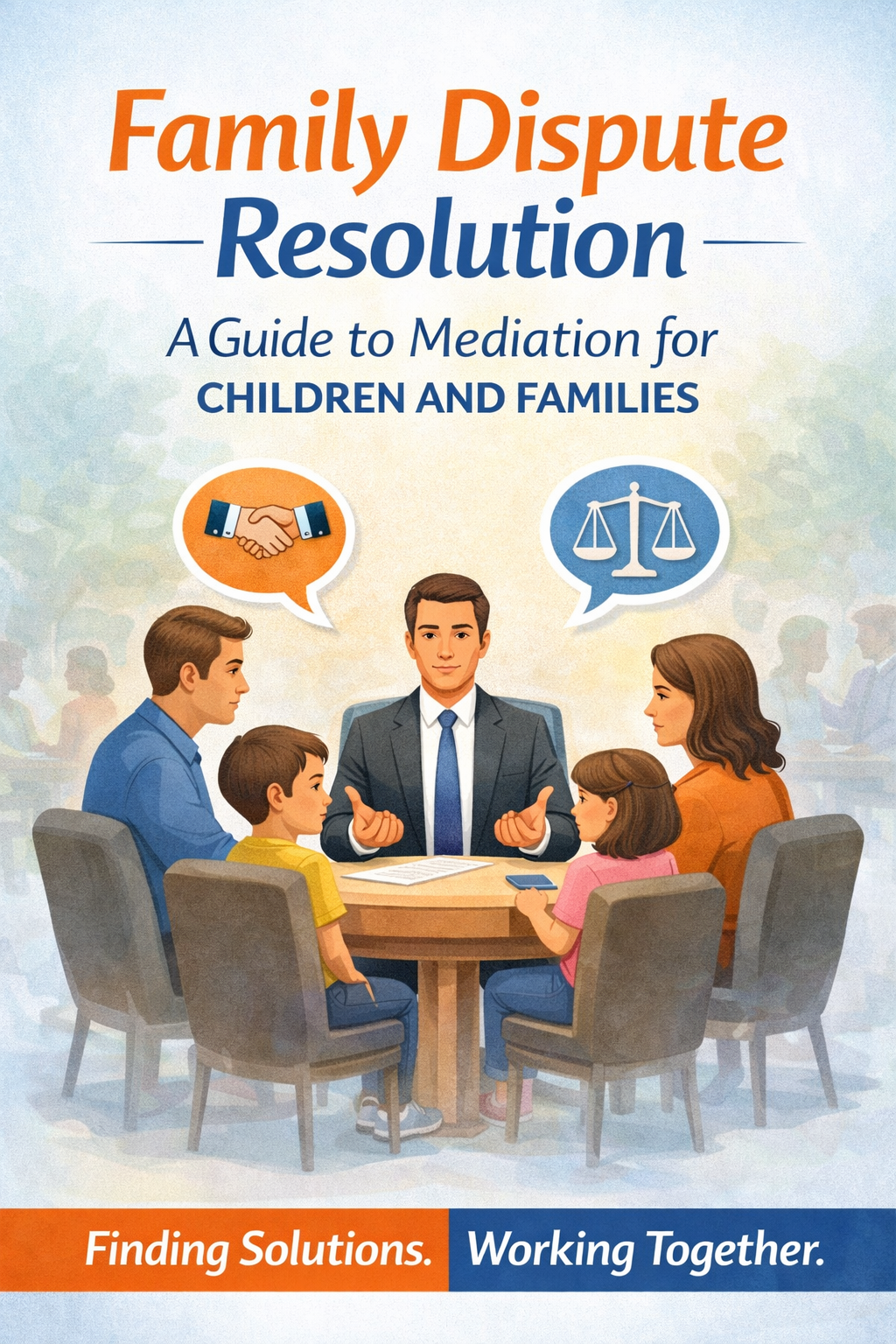

Family Disputes Resolution: A Guide to Mediation for Children and Families
Introduction
Family disputes are an unfortunate reality for many Australian families. Whether stemming from separation, divorce, or ongoing disagreements about parenting arrangements, these conflicts can take a significant emotional and financial toll especially on children. In 2024, Australia saw 47,216 divorces granted, with approximately half involving children under 18. Yet there's a silver lining: family dispute resolution through mediation offers a proven, child-focused alternative to costly court battles.
If you're navigating a family dispute involving children, you've likely heard the term "mediation" thrown around. But what does it really mean? How can it help resolve your situation? And most importantly, how can it protect your children's wellbeing during a difficult time?
This comprehensive guide explores family dispute resolution through mediation, the critical role it plays in protecting children, and why it's becoming the preferred approach for families across Australia.
What Is Family Dispute Resolution and Mediation?
Family dispute resolution (FDR) is a structured, confidential process where a trained, neutral mediator helps family members communicate and negotiate agreements on matters affecting their family particularly parenting arrangements and children's living arrangements.
Unlike court proceedings, which are adversarial and public, mediation is:
- Confidential: What's discussed stays private
- Collaborative: Both parties work toward mutually beneficial solutions
- Child-focused: The best interests of children remain central
- Cost-effective: Significantly cheaper than litigation
- Faster: Typically resolved in weeks or months, not years
In Australia, family dispute resolution is mandatory for parents seeking court orders about children under the Family Law Act 1975. Before you can file for court orders regarding parenting arrangements, you must first attempt FDR unless there are safety concerns like family violence.
Why Family Dispute Resolution Matters for Children
The impact of family conflict on children is well-documented. Research shows that how parents handle disputes not the dispute itself determines children's long-term emotional and psychological outcomes.
Mediation creates better outcomes for children because:
Reduces Ongoing Conflict
Children exposed to prolonged parental conflict experience higher rates of anxiety, depression, and behavioral problems. Mediation resolves disputes faster, reducing the duration of conflict children witness.
Preserves Relationships
Court battles often damage the parent-child relationship and the co-parenting dynamic. Mediation helps parents maintain respectful relationships, which benefits children who need both parents in their lives.
Gives Children a Voice
Through child-inclusive mediation, children (typically aged 5-17) can share their views with a specialist, ensuring their needs and preferences are heard without pressure or bias.
Provides Stability and Certainty
Mediated agreements are more durable than court orders. Studies show families honor mediated agreements at higher rates because they've had input into creating them.
The Statistics: Why Mediation Works
The numbers speak for themselves. Recent 2024-2025 Australian research reveals compelling evidence for family dispute resolution:
70-80% Success Rate
Over 70% of family mediations result in full agreements, compared to only 50-60% compliance with court orders.
Significant Cost Savings
A 2024 cost-benefit analysis found that FDR yields $20 in benefits for every $1 invested. Families save an average of $41,800 per case in court costs, with total benefits exceeding $63,000 when factoring in reduced stress, better child outcomes, and faster resolution.
Court Demand Relief
The Federal Circuit and Family Court handled 101,092 family law applications in 2024-2025. Mediation reduces court caseloads, meaning faster processing for those cases that do proceed to court.
Better Child Outcomes
Children in mediated cases report less conflict exposure and greater optimism about their family's future compared to those in adversarial court proceedings.
Types of Family Mediation for Children and Families
Standard Family Dispute Resolution
The most common form, standard FDR typically involves 3-4 hour sessions where both parents (or family members) meet with a mediator to discuss and negotiate agreements on:
- Living arrangements and custody
- Contact schedules and holidays
- Decision-making responsibilities (education, health, religion)
- Financial contributions to children's care
Shuttle Mediation is available for high-conflict cases, where the mediator meets with each party separately, carrying proposals back and forth.
Child-Inclusive Mediation
This specialized approach involves a child specialist interviewing children separately to understand their views, preferences, and concerns. The specialist then feeds this information into the mediation process without putting pressure on children or forcing them to "choose sides."
Child-inclusive mediation is particularly valuable when:
- Children have strong preferences about living arrangements
- High conflict makes it unsafe for children to express views directly
- Parents need to understand their children's perspective
- Older children want a voice in decisions affecting them
Parenting Mediation
Focused specifically on post-separation parenting disputes, parenting mediation addresses ongoing disagreements about:
- School and education choices
- Health and medical decisions
- Holiday and contact arrangements
- Extracurricular activities and expenses
- Changes to parenting arrangements as children grow
The Family Dispute Resolution Process: What to Expect
Understanding what happens during mediation can ease anxiety and help you prepare.
Step 1: Initial Consultation
You'll meet with a mediator (separately or together) to discuss your situation, understand the process, and determine if mediation is appropriate. Many providers offer free 15-minute consultations.
Step 2: Preparation
You'll gather relevant information (financial documents, parenting schedules, etc.) and clarify what you hope to achieve through resolution.
Step 3: Mediation Sessions
Typically 3-4 hours, these sessions involve structured communication facilitated by the mediator. You'll discuss issues, explore options, and work toward agreements.
Step 4: Agreement Documentation
If you reach agreement, the mediator helps document it in a Parenting Plan or Family Law Agreement that both parties sign.
Step 5: Court Filing (if needed)
If you need court-enforceable orders, your agreement can be filed with the Federal Circuit and Family Court.
Important Note: If mediation is unsuccessful or unsuitable, the mediator issues an s60I Certificate, which you'll need before filing for court orders.
How Mediation Protects Children's Interests
Children's wellbeing is paramount in any family dispute resolution process. Here's how mediation specifically protects children:
Minimizes Trauma
By avoiding adversarial court battles, children are shielded from the stress, publicity, and emotional toll of litigation.
Maintains Relationships
Mediation encourages parents to cooperate, helping children maintain healthy relationships with both parents.
Ensures Child-Focused Outcomes
Mediators are trained to ensure agreements prioritize children's best interests, not parental desires.
Provides Flexibility
Mediated agreements can be tailored to children's specific needs and can evolve as circumstances change, unlike rigid court orders.
Reduces Financial Strain
By saving families tens of thousands of dollars, mediation ensures more resources are available for children's education, activities, and wellbeing.
Common Family Disputes Resolved Through Mediation
Separation and Divorce
The most common use of FDR, helping separating parents establish parenting arrangements and financial settlements.
Custody and Living Arrangements
Disputes over where children live and how much time they spend with each parent.
Contact and Holiday Disputes
Disagreements about visitation schedules, school holidays, and special occasions.
Parenting Decision-Making
Conflicts over education choices, medical treatment, religious upbringing, and major life decisions.
Post-Separation Parenting Changes
Modifying existing arrangements when circumstances change (relocation, job changes, children's needs evolving).
Extended Family Disputes
Grandparents seeking contact with grandchildren or other family members involved in parenting disputes.
Why Choose Professional Family Dispute Resolution?
While some families attempt to resolve disputes independently, professional mediation offers distinct advantages:
Neutral Facilitation
A trained mediator keeps discussions focused and fair, preventing one party from dominating.
Legal Knowledge
Mediators understand family law and ensure agreements comply with legal requirements.
Communication Skills
Professional mediators help families communicate effectively, even when emotions run high.
Child Expertise
Specialists in child-inclusive mediation understand child development and can appropriately involve children in the process.
Enforceability
Professionally mediated agreements are more likely to be honored and can be made legally binding through court orders.
Emotional Support
While mediators aren't therapists, they create a safe space for difficult conversations and help families move forward constructively.
Getting Started with Family Dispute Resolution
If you're facing a family dispute involving children, here's how to begin:
1. Seek Information
Research FDR providers in your area. Look for mediators accredited under the Family Law Act and experienced in child-focused resolution.
2. Schedule a Consultation
Most providers offer free initial consultations to discuss your situation and determine if mediation is right for you.
3. Prepare Honestly
Come to mediation ready to discuss your concerns, listen to the other party, and work toward solutions that serve your children's best interests.
4. Stay Focused on Children
Remember that the goal is reaching agreements that protect and support your children, not "winning" against the other parent.
5. Follow Through
Once you've reached agreement, honor it. Consistency and reliability help children feel secure during family transitions.
The Long-Term Benefits of Mediation
Choosing family dispute resolution through mediation offers benefits that extend far beyond the immediate resolution:
Reduced Stress and Anxiety
Families report significantly lower stress levels after mediation compared to court battles.
Preserved Co-Parenting Relationships
Parents who mediate are more likely to maintain respectful relationships, benefiting children long-term.
Better Compliance
Families honor mediated agreements at higher rates because they've had input into creating them.
Faster Moving Forward
Mediation resolves disputes in weeks or months, allowing families to move forward and rebuild.
Financial Security
Saving tens of thousands of dollars means more resources for children's education, activities, and wellbeing.
Improved Child Outcomes
Children whose parents resolve disputes through mediation show better emotional adjustment, academic performance, and relationship skills.
Conclusion: Choosing Resolution Over Conflict
Family disputes involving children are never easy, but how you handle them matters profoundly. Family dispute resolution through mediation offers a proven, child-focused alternative to costly court battles one that protects your children's emotional wellbeing while achieving fair, durable agreements.
The statistics are clear: mediation works. Over 70% of families reach full agreements, save an average of $41,800 per case, and report better long-term outcomes for their children. More importantly, children whose parents choose mediation experience less conflict, maintain stronger relationships with both parents, and adjust better to family changes.
If you're navigating a family dispute, don't let conflict define your family's future. Professional mediation can help you find resolution that serves everyone especially your children.
Ready to Explore Family Dispute Resolution?
If you're facing a family dispute involving children, professional mediation could be the solution you need. At Mediation House, we specialize in child-focused family dispute resolution across Australia, with locations in Brisbane, Gold Coast, Sunshine Coast, Sydney, and Melbourne plus online options nationwide.
Take the first step today:
- Schedule a free 15-minute consultation to discuss your situation with an experienced mediator
- Learn about child-inclusive mediation if you want your children's voices heard
- Discover how mediation can save your family time, money, and emotional stress
Don't let family conflict define your children's future. Contact Mediation House today and explore how professional family dispute resolution can help your family move forward.
Your children deserve parents who can communicate respectfully. Mediation makes that possible.